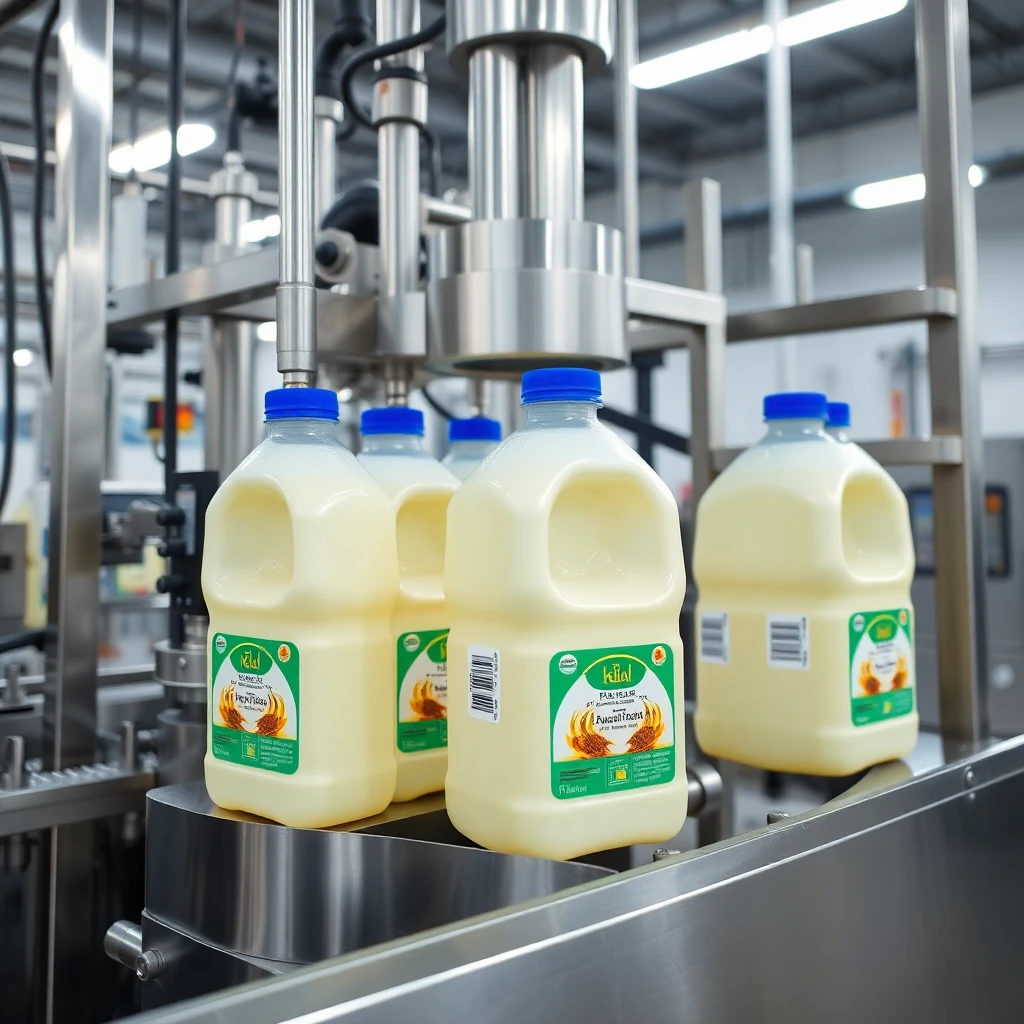
Oil Machine Comparison
Edible Oil vs Lubricant Oil Filling Machine
A comparison guide for buyers who searched oil filling machine but need to confirm whether their project is food oil or industrial oil.
Short Answer
Edible oil filling and lubricant oil filling may look similar, but the buying priorities are different. Edible oil projects focus on food-contact parts, bottle stability and clean changeover. Lubricant projects focus on viscosity, drip control, pails, drums and sometimes hazardous-area review.
Different products create different risks
Edible oil buyers usually worry about hygiene, food-contact material, cap quality, leakage and retail packaging consistency. Lubricant buyers usually worry about viscosity, slow tailing, drip control, bucket handling, drum weighing and operator safety.
Container formats often decide the layout
Edible oil projects are often 250 ml to 5 L bottles, tins or pouches. Lubricant projects may include small bottles, jerrycans, buckets, pails, 200 L drums or IBC totes. These formats require different conveyors, filling heads, closures and weighing stations.
- For edible oil bottles, send bottle material, volume, cap type and label position.
- For lubricant buckets, send handle, lid and closure details before capping is quoted.
- For drum or IBC filling, send fill weight, pallet handling and site safety requirements.
Material and cleaning expectations differ
Food-grade oil normally requires food-contact material and easier cleaning. Lubricant lines may need stronger anti-drip design and product changeover planning, especially when several viscosities share one line.
How to avoid a wrong quotation
Do not ask only for an oil filling machine price. State whether the oil is food-grade or industrial, show the container, describe the output target and list whether filling, capping, labeling or packing should be included.
Selection Points
RFQ Checklist
| 1 | Oil category: edible oil, lubricant oil, chemical oil or mixed use. |
| 2 | Container: bottle, tin, pouch, jerrycan, bucket, pail, drum or IBC. |
| 3 | Product behavior: viscosity, foaming, temperature and whether heating is needed. |
| 4 | Line scope: filling only or filling with capping, labeling, coding and packing. |
| 5 | Compliance expectation: food-contact, explosion-proof review or other project documentation. |
Common Buyer Questions
Can edible oil filling equipment be used for lubricant oil?
A shared platform may be possible in some cases, but the final configuration must be reviewed. Lubricant viscosity, drip control and container handling may require different nozzles, pumps, weighing or closure systems.
Which one is better for oil bottles, edible oil or lubricant pages?
Use edible oil pages when the product is food oil. Use lubricant pages when it is motor oil, hydraulic oil, gear oil or coolant. If the search term is broad, the oil filling machines category is the best starting point.
What should I send if I am not sure which category fits?
Send the oil name, container photos, cap type, target output and destination country. HEMUfill can route the request to the right edible oil, lubricant or bulk filling configuration.
Related Products
Related Guides
Need a clearer filling machine quotation?
Send the product name, container details, output target and required modules. HEMUfill will route the inquiry to the right filling machine configuration.
Send RFQ Details